 PennyPerHour
How much does a heated airer cost to run?
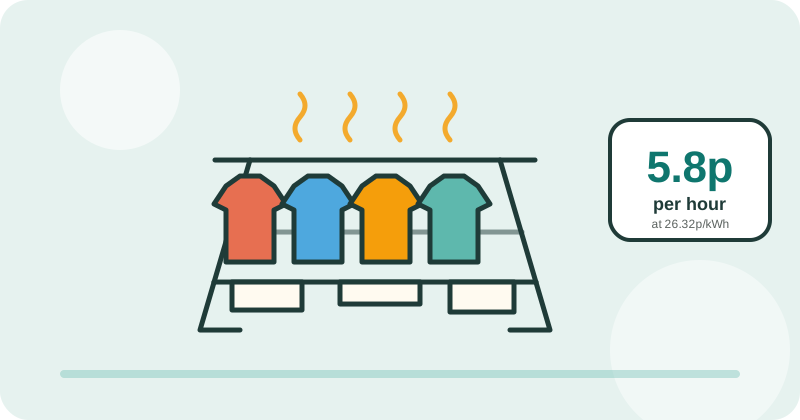
A typical heated airer uses around 220 watts, which works out at about 5.8p per hour on the current price cap rate of 26.32p per kWh. A full load left on for six hours costs roughly 35p.
Electricity 26.32p/kWh, gas 7.97p/kWh (Ofgem cap, 1 October to 31 December 2026). Typical figures.
Heated airer running costs by size
Most heated airers are between 120W (small two-tier models) and 300W (large winged or three-tier models). Here's what that means at 26.32p/kWh:
| Appliance | 1 hour | 4 hours | 6 hours | 8 hours |
|---|---|---|---|---|
| Small airer (120W) | 3.2p | 13p | 19p | 25p |
| Standard airer (220W) | 5.8p | 23p | 35p | 46p |
| Large / 3-tier airer (300W) | 7.9p | 32p | 47p | 63p |
Based on 26.32p/kWh, the Ofgem price cap for 1 October to 31 December 2026.
These figures assume the airer is on at full power the whole time. Heated airers don't have thermostats in the way radiators do, so they usually draw close to their rated wattage while switched on.
Heated airer vs tumble dryer
A tumble dryer is quicker, but uses much more energy per load. Typical figures for a full 8–9kg load:
- Vented or condenser tumble dryer: about 4.5kWh a load = £1.18
- Heat pump tumble dryer: about 1.5kWh a load = 39p
- Heated airer (220W, 6 hours): 1.32kWh = 35p
So a heated airer is usually the cheapest powered option, roughly on a par with a heat pump dryer, but it's slower and holds less. If you dry several loads a week, the cost difference against an older vented dryer adds up quickly: four loads a week saves around £174.09 a year.
How to dry clothes faster on a heated airer
- Use a cover. Many airers sell one, and it traps warm air around the clothes. This is the single biggest speed improvement.
- Spin hard first. Use your washing machine's fastest spin (1,400rpm if it has it). Less water in = less drying time.
- Space items out. Overlapping clothes stay damp in the middle.
- Pair it with a dehumidifier in a small, closed room. The dehumidifier pulls moisture out of the air so clothes dry faster and you avoid condensation and mould. See our dehumidifier running costs guide.
- Turn it off when it's done. A timer plug or a smart plug stops it running all night for nothing.
What to look for when buying
- Wattage and capacity together. Compare how many metres of hanging space you get per watt, not just the wattage.
- Included cover or one available to buy.
- Folding size if you have to store it in a cupboard.
- Timer or auto-off so it can't be left on by accident.
Work out the cost for your heated airer
Change the wattage or hours to match yours.
Default price is the Ofgem cap for 1 October to 31 December 2026. Check your bill for your exact unit rate. Figures exclude standing charges.
What to buy: our picks by need
We recommend types of product based on running costs and features, not specific brands we have tested.
An airer that comes with a fitted cover. The cover traps warm air and is the biggest single speed boost.
See options on Amazon →A slim two-tier airer around 120–200W that folds flat to store behind a door.
See options on Amazon →A three-tier or winged airer with 20m+ of hanging space, so one session handles a full load.
See options on Amazon →Shopping for one? Compare current models, prices and wattages before you buy.
Browse heated airers on Amazon →Affiliate link: we may earn a small commission at no extra cost to you.
Thanks for letting us know.
Frequently asked questions
Is it cheaper to use a heated airer or the radiators?
Drying clothes on radiators uses heat you're already paying for, but it adds a lot of moisture to the air and makes the boiler work harder. A heated airer is a targeted alternative and costs about 5.8p an hour.
Can I leave a heated airer on overnight?
Many people do, but check the manufacturer's instructions. A timer plug is the simplest way to stop it running for longer than needed.
How long do clothes take to dry on a heated airer?
Usually 3 to 8 hours depending on the fabric, room temperature, and whether you use a cover.